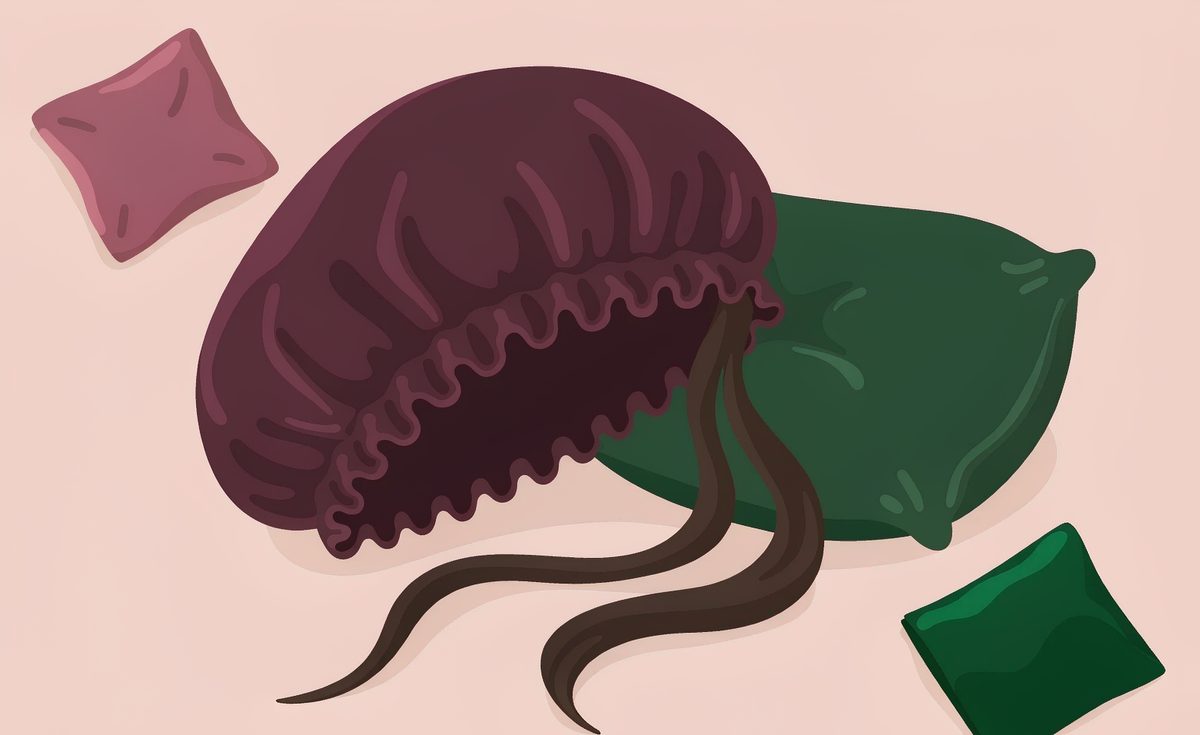
Sleep bonnets crossed over from a curly-hair community essential into the mainstream — and for good reason. Cotton pillowcases grip individual strands as you move, causing friction, frizz, breakage, and moisture loss. A smooth bonnet eliminates that friction overnight, which is why hairstylists recommend them to clients with curls, color treatments, extensions, or fragile ends.
Here is what actually matters when buying one — because the difference between a $8 satin bonnet and a $35 mulberry silk one is real, but smaller than marketing suggests.
What a Sleep Bonnet Actually Does
- Cuts friction: No cotton fibers catching and bending individual strands all night — the root cause of frizz and split ends
- Locks in moisture: Cotton wicks natural oils out of hair; satin and silk do not, so hair stays hydrated
- Preserves styles: Blowouts, braids, twists, and curls last days longer — meaning less restyling heat damage
- Reduces breakage: Less snapping at the hairline and ends, so you retain more length over months
- Skin bonus: If your hair touches your face, less product transfer means fewer morning breakouts
Silk vs Satin: The Honest Comparison
This confuses everyone, so let us clear it up: silk is a fiber, satin is a weave. A satin bonnet is almost always polyester woven in a satin pattern. Both are smooth; they differ in feel and function:
| Mulberry Silk (19-22 momme) | Polyester Satin | |
|---|---|---|
| Friction reduction | Excellent | Very good |
| Breathability | Excellent — natural protein fiber | Decent, can feel warm |
| Skin friendliness | Hypoallergenic, gentle | Good for most; can trap heat |
| Durability | 2-3 years with hand-washing | 1-2 years, machine washable |
| Typical price | $20-40 | $6-15 |
| Best for | Sensitive skin, hot sleepers, eczema | Most people, first-time buyers |
When buying silk, the number to check is momme (mm) — a density measure. 16 mm is flimsy; 19-22 mm is the sweet spot for durability. Under $15 "silk" bonnets are almost always mislabeled polyester.
Bonnet vs Silk Pillowcase: Which Should You Buy?
The internet argues about this endlessly. The practical answer:
- Bonnet wins for: long hair, curls (type 3-4), extensions, locs, braids, heavy tossers-and-turners — your hair stays contained regardless of sleep position
- Pillowcase wins for: short hair, people who cannot stand anything on their head at night, and facial skin benefits (your cheek touches the pillowcase directly)
- Both together is the maximum-protection setup many with fragile or colored hair choose
If night headwear bothers you, also consider a silk scrunchie plus pillowcase combo — a loose pineapple bun on a silk pillowcase captures most of the benefit with nothing on your head.
How to Choose a Bonnet That Stays On
The #1 complaint in bonnet reviews is "it slides off by morning." Buy based on these features:
- Band width: 1-inch or wider bands grip better and leave fewer morning lines on your forehead than thin elastic
- Double-layer construction: Two layers add grip and durability over single-layer bonnets
- Adjustable options: Tie-back or drawstring styles let you tune tension — best for very small or large heads
- Size: Extra-long or large-capacity bonnets exist for very long hair, locs, and bulky protective styles; a stuffed-tight bonnet will migrate off
- Reversible designs: Two colors in one, and you can flip to a clean side between washes
Where to Buy
SleepWell Guide tested prices across major retailers — Amazon has the widest selection and most honest review baselines:
- Budget satin picks: Double-layer satin bonnets on Amazon — under $12, great first bonnet
- Mulberry silk upgrade: 19-22 momme silk bonnets on Amazon — the premium tier
- Combo packs: Bonnet + silk pillowcase + scrunchies bundles usually beat individual prices
Care Tips to Make It Last
- Satin: Machine wash cool in a mesh bag, air dry — easy
- Silk: Hand wash cool with mild soap (or baby shampoo), air dry away from sunlight
- Wash every 1-2 weeks — scalp oils and product build up and transfer back to hair
- Rotate two bonnets so one is always clean — this is why the cheap satin multipacks are smart
Pair It With the Rest of Your Night Routine
A bonnet stacks beautifully with other low-cost sleep upgrades: a cooling weighted blanket for deep-pressure calm, brown noise to mask a noisy room, a weighted eye mask for blackout plus gentle pressure, or our full nasal breathing guide if snoring is the real enemy. Hair protection plus sleep quality — morning-you will notice both.
Frequently Asked Questions
Can men wear sleep bonnets?
Absolutely — bonnets protect waves, locs, braids, and curls regardless of gender. Wave caps and durags serve a similar function for shorter styles; bonnets suit longer hair.
How often should I replace a bonnet?
Satin bonnets flatten and lose smoothness after 1-2 years of nightly use; silk lasts 2-3 years with gentle care. If the inside feels less slick or the band has gone loose, replace it.
Will a bonnet flatten my curls overnight?
The opposite — curls come out defined and frizz-free. Place hair loosely into the bonnet (do not pack it tight), and refresh with water or leave-in conditioner in the morning.