Weighted Blanket for Anxiety: Do They Help You Sleep?
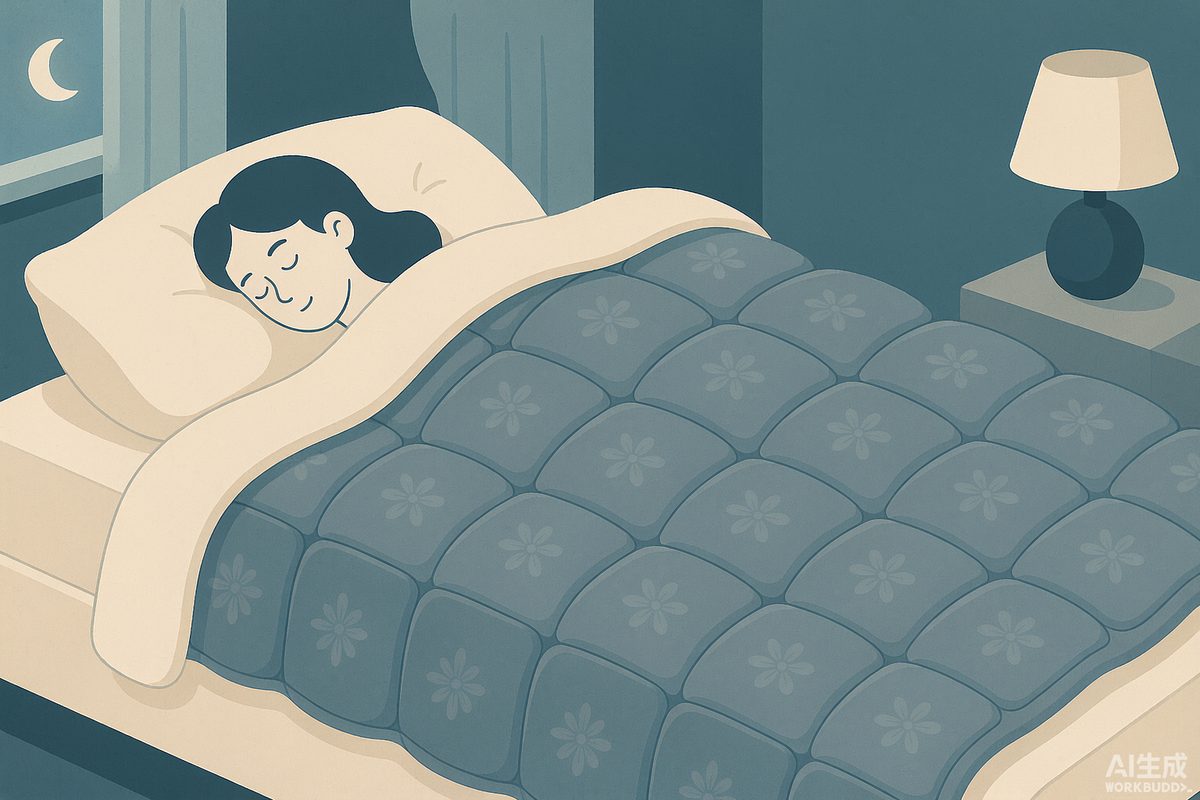
If your mind races the second your head hits the pillow, you have probably seen the claim that a weighted blanket "cures" anxiety and insomnia. The truth is more modest — and more useful. A weighted blanket is a comfort tool built on a real mechanism called deep pressure stimulation (DPS). It will not replace therapy or medication, but for a lot of anxious sleepers it takes the edge off enough to fall asleep faster. Here is what the research actually says, who it helps, who should skip it, and how to choose one that is not a waste of money.
What a weighted blanket does (and what deep pressure stimulation is)
A weighted blanket is filled with glass beads or plastic pellets that distribute 5–30 lb of gentle, even pressure across your body. That pressure mimics the feeling of being held or swaddled. The mechanism — deep pressure stimulation — is the same reason a tight hug or a swaddle calms a baby: it appears to nudge the nervous system out of "fight or flight" (sympathetic) and toward "rest and digest" (parasympathetic).
In practice that means lower arousal, a small drop in cortisol, and a bump in the calming neurotransmitters (serotonin, and downstream melatonin) that set you up for sleep. It is a physiological "slow down" signal, not magic.
What the research actually says
The evidence is promising but small. Two studies come up most often:
- Ekholm et al., 2020 (Journal of Clinical Sleep Medicine): a randomized controlled trial of 120 adults in psychiatric care. After 4 weeks, the weighted-blanket group had significantly lower anxiety (GAD-7) and depression (MADRS) scores and better sleep maintenance than the control group. About 60% said they preferred the weighted blanket.
- Ackerley et al., 2015 (Journal of Sleep Research): 31 adults with chronic insomnia used a weighted blanket for 4 weeks. Self-reported sleep onset got quicker, nighttime movement dropped, and participants felt more refreshed in the morning.
Read those honestly and the limits show up: samples are small, many participants already had anxiety or psychiatric diagnoses, and "feeling calmer" is hard to fully separate from a placebo. But the direction is consistent — for anxious, wired-at-night sleepers, a weighted blanket is a low-risk thing worth trying.
Who benefits most
- Generalized anxiety with a "can't shut my brain off" bedtime pattern
- Difficulty falling asleep (long sleep-onset latency)
- PTSD-related hyperarousal or restlessness
- Some ADHD and autism profiles where deep pressure is self-soothing
- Restless legs or light, twitchy sleepers who like the "held in place" feel
Who should skip or be cautious
A weighted blanket is not for everyone, and a few cases are genuine red flags:
- Untreated sleep apnea or COPD — extra chest pressure can be uncomfortable and is worth clearing with a doctor first.
- Circulation problems or conditions where pressure on the limbs is a concern.
- Claustrophobia — if being covered feels trapping, this will backfire.
- Anyone who cannot easily push it off — very young children and some older adults need supervision; most makers say no blanket under age 2–3, and child weight should follow the 10% rule with a pediatrician's okay.
- Hot sleepers — a plush standard blanket can overheat you. Choose a cooling version (below).
How to choose the right one
- Weight: ~10% of body weight. A 150–180 lb adult usually lands at 15–20 lb. If unsure, go lighter.
- Filling: glass beads are quieter and distribute more evenly than plastic pellets.
- Size: it should cover your body, not hang over the edges of the bed (a 48"×72" twin-size is typical for one person).
- Fabric: breathable cotton or bamboo. If you run hot, get a cooling weighted blanket with a moisture-wicking cover so the pressure does not come with night sweats.
- Care: a removable, washable cover saves you from washing the whole weighed insert.
Weighted blanket vs weighted eye mask
These are complementary, not competitors. A full weighted blanket gives whole-body deep pressure; a weighted eye mask delivers a smaller, targeted dose of pressure at the eyes and blocks light — handy on planes, in bright bedrooms, or for people who share a bed and do not want a 20 lb blanket. Many anxious sleepers use both.
How to try it without wasting money
- Buy from a retailer with a 30–60 day return window; you are testing fit, not committing blind.
- Use it for the first 10–15 minutes while awake, then settle in — let the routine build.
- Pair it with a fixed bedtime and a screen-free wind-down; the blanket amplifies a routine, it does not replace one.
- Give it two weeks before judging. Studies measured change at the 4-week mark.
The bottom line: a weighted blanket is a genuine comfort intervention for anxious, hard-to-settle sleepers — the deep-pressure mechanism is real and the best studies point the right way. It is not a cure and not for everyone (skip it with untreated apnea or a fear of being covered). Pick ~10% of your body weight, a breathable fabric, and a sane return policy, and it is one of the lower-risk things you can add to a sleep routine.
Frequently Asked Questions
Do weighted blankets really reduce anxiety?
Several small studies show weighted blankets reduce self-reported anxiety and improve sleep in people with generalized anxiety, insomnia, or psychiatric conditions. The largest randomized trial (Ekholm et al., Journal of Clinical Sleep Medicine, 2020) found significantly lower anxiety and depression scores after 4 weeks. They are a comfort tool, not a treatment — they will not replace therapy or medication for an anxiety disorder.
How heavy should a weighted blanket be?
The standard guideline is about 10% of your body weight, rounded to the nearest available size. A 150–180 lb adult usually does well with a 15–20 lb blanket. It should feel snug and settling, not so heavy that you struggle to move or roll over. If you are between sizes, choose the lighter one.
Can a weighted blanket help with insomnia?
Some research points that way. A 2015 study in the Journal of Sleep Research found weighted blankets shortened sleep-onset time and reduced nighttime movement in people with chronic insomnia. Benefits are usually modest and work best as part of a consistent wind-down routine, not as a standalone cure.
Are weighted blankets safe for side sleepers?
Yes, for most healthy adults. Pick a weight around 10% of body weight and a breathable fabric so it does not trap heat on your shoulder and hip. Side sleepers who run hot should look at a cooling weighted blanket rather than a plush fleece one. Avoid them if you have untreated sleep apnea or any condition where extra chest pressure is uncomfortable.
What is the difference between a weighted blanket and a cooling weighted blanket?
A standard weighted blanket focuses on deep-pressure comfort and may use warmer fabrics. A cooling weighted blanket pairs the weight with breathable, moisture-wicking materials (bamboo, Tencel, or a cooling cover) so you get the pressure without overheating. If night sweats or a warm bedroom are your problem, the cooling version is the better pick — see our cooling weighted blanket guide for specifics.
How long before you notice sleep improvements?
Many people feel calmer the first night from the pressure sensation itself, but measurable sleep changes in studies appeared over 2–4 weeks of regular use. Give it at least two weeks, use it as part of a fixed bedtime routine, and buy from a retailer with a generous return window so you are not stuck with the wrong weight.
Medical disclaimer: This article is for general information only and is not medical advice. If anxiety or insomnia is affecting your life, talk to a clinician. Do not use a weighted blanket as a substitute for treatment of a diagnosed sleep or psychiatric disorder.
Keep reading: if heat is the thing keeping you up, our cooling weighted blanket guide pairs pressure with breathability, and the weighted eye mask breakdown covers the lighter, travel-friendly option. For the bigger temperature picture, see our best cooling comforter, best cooling pillow, and best cooling mattress pad.
Ready to try one? Compare weighted blankets on Amazon and check the return window first.
Some links on SleepWell Guide are affiliate links. If you buy through them we may earn a commission, at no extra cost to you. We only recommend products we would use ourselves.