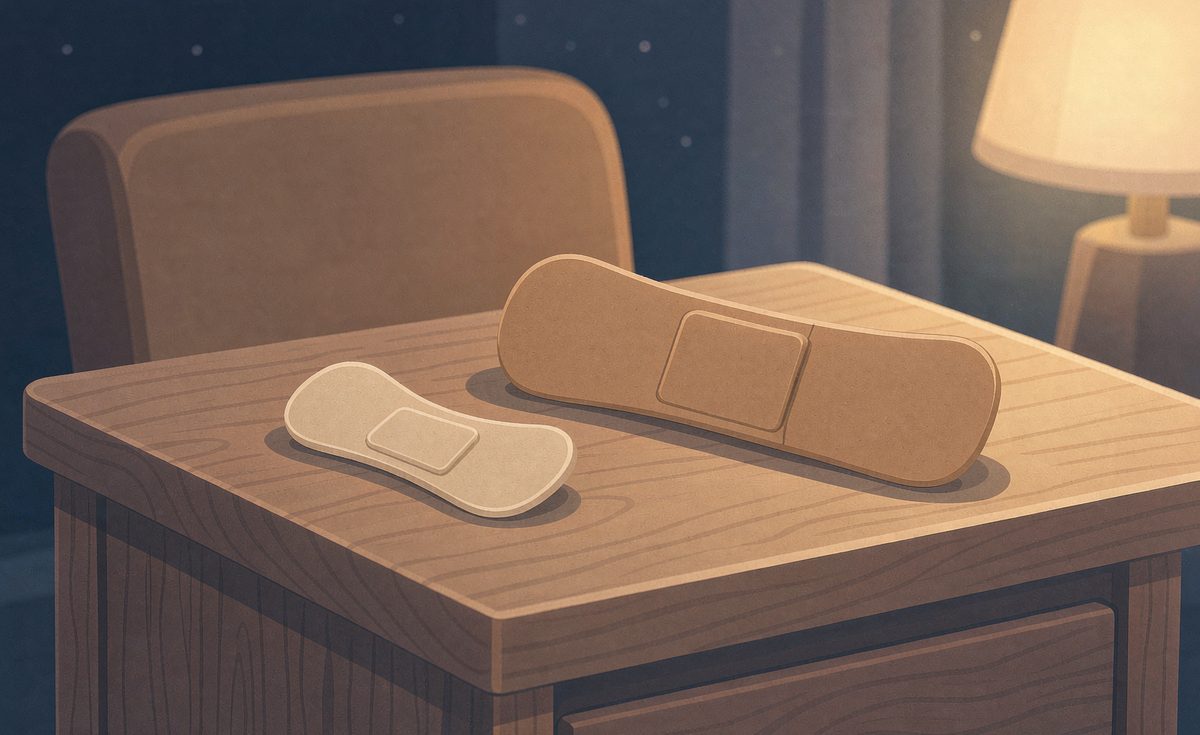
Walk down the sleep aisle of any drugstore and you will see both products: nasal strips sitting next to the cold medicine, and mouth tape trending all over social media. They look related — both are adhesive strips you wear in bed — but they solve opposite problems.
Pick the wrong one and you will waste months wondering why nothing changed. Here is the difference in one sentence: nasal straps open blocked noses; mouth tape closes open mouths. Now let us figure out which one your sleep actually needs.
What Each Product Actually Does
Nasal Strips: A Mechanical Nose Opener
A nasal strip is a springy band with adhesive on the back. You stick it across the bridge of your nose, and it physically pulls the sides of your nasal passages outward — like propping open a door. It is purely mechanical: no medicine, no drugs, works instantly, and stops working the moment you remove it.
Best for: congested noses from allergies, colds, deviated septums (mild), narrow nostrils that collapse when breathing hard.
Mouth Tape: A Habit Corrector
Mouth tape keeps your lips closed during sleep, so you breathe through your nose instead of your mouth. The nose filters, warms, and humidifies air — the mouth does none of that. Taping trains the default nighttime breathing pattern, and many people eventually stop needing the tape at all.
Best for: open-mouth sleepers, dry mouth on waking, mouth-based snoring.
Head-to-Head Comparison
| Factor | Nasal Strips | Mouth Tape |
|---|---|---|
| Primary problem solved | Blocked or narrow nose | Mouth breathing at night |
| How it works | Mechanically opens nostrils | Keeps lips closed |
| Dry mouth fix | Indirect (only if it enables nasal breathing) | Direct — usually resolves first night |
| Snoring reduction | Works if snoring is nasal | Works if snoring is mouth-based |
| Comfort (first week) | Comfortable immediately | Needs adjustment period |
| Safety considerations | Very low risk | Not for everyone (see below) |
| Cost per night | $0.30-0.60 | $0.10-0.60 |
| Long-term need | Ongoing (mechanical fix) | Often temporary (habit fix) |
The 10-Second Self-Diagnosis
Answer these two questions to know which one you need:
- Close your mouth and try to breathe only through your nose for 60 seconds. Is it easy and silent? If no → nasal strips.
- When you wake up, is your mouth dry, your throat sore, or your pillow damp? If yes → mouth tape.
"Yes" to both means you can use both together — the strip opens the nose while the tape keeps the mouth shut, a combination sleep coaches recommend for congested mouth breathers.
What the Science Says
Nasal strips: Multiple peer-reviewed studies confirm nasal strips increase nasal airflow volume. A well-known study in the Journal of Clinical Sleep Medicine found they can reduce snoring intensity and mild sleep apnea symptoms — but only in people whose obstruction was nasal. For everyone else, the effect was negligible.
Mouth tape: Direct research is thinner but growing. Pilot studies show mouth taping increases the percentage of time spent breathing nasally during sleep and reduces snoring episodes in mouth breathers. The strongest evidence supports what users report: eliminating dry mouth and improving subjective sleep quality. Our complete guide to mouth tape covers the research in detail.
Safety: The One Big Difference
Nasal strips are among the safest sleep products available — external, drug-free, no airway interference. The worst outcome is usually skin irritation from the adhesive.
Mouth tape requires more caution. You should not tape if:
- You cannot breathe comfortably through your nose (fix that first — possibly with nasal strips)
- You have untreated sleep apnea
- You have severe reflux or have consumed alcohol
If you are new to taping, follow our step-by-step mouth taping guide, which includes a safe progression from daytime practice to your first taped night. For the full risk picture — the contraindication list, the nose check, and what the research says — read is mouth taping safe?
Our Product Picks for Each
Best Nasal Strip: Breathe Right Original
$12.49 (26 strips)
The category standard. Flexible spring bands in small/medium/large sizes, with a "Clear" version for sensitive skin. Stays on all night and comes off without leaving marks.
- Proven mechanical design
- Multiple sizes
- Available everywhere
- Adhesive weakens with sweat
- Single-use only
Best Mouth Tape: Somnifix Sleep Strips
$19.99 (32 strips)
Purpose-built for sleep with a central vent, gentle adhesive, and a lip-friendly shape. The best choice for beginners nervous about feeling trapped.
- Central vent for emergency breathing
- Comfortable from night one
- Designed for nightly use
- Higher cost per strip than medical tape
Final Verdict
These are not competitors — they are complementary tools for different problems. Diagnose your issue first with the 60-second test above:
- Nose blocked? → Nasal strips (start with Breathe Right)
- Mouth open? → Mouth tape (start with Somnifix — see our best mouth tape of 2026 rankings)
- Both? → Use both together — this combination is more effective than either alone
If heavy snoring or gasping at night is part of your picture, skip both and talk to a doctor about a sleep study first — that is a sign of sleep apnea, and neither product treats it.
Keep reading: If you are deciding between mouth tape and nasal strips specifically because of snoring, our mouth taping for snoring guide explains which of the two levers matches your actual cause. And before your first night, our mouth taping side effects guide covers the risks and how to avoid them.